Sewage Cleanup and Sewer Backup Restoration Services

A sewage backup can create a serious problem inside a home or commercial property. Wastewater may enter through toilets, showers, bathtubs, floor drains, utility sinks, or basement plumbing fixtures. The water can damage flooring, drywall, insulation, cabinets, furniture, and personal belongings.
Sewage may contain harmful microorganisms, chemicals, human waste, and other contaminants. Property owners should avoid direct contact and keep children, pets, tenants, employees, and customers away from the affected area.
Restoration Companies helps homeowners, landlords, property managers, and business owners across the United States connect with local professionals for sewage extraction, contaminated material removal, cleaning, structural drying, odor control, and property restoration.
A plumber or sewer contractor may also be needed to clear the blockage, repair the sewer line, or stop wastewater from continuing to enter the building. Restoration professionals focus on removing contamination and restoring the affected property after the source has been controlled.
Service availability, response times, licensing, certifications, and insurance requirements vary by location. Property owners should confirm the qualifications, insurance, and proposed scope of work of any contractor before hiring.
Emergency Sewage Cleanup Services
Sewage damage should be addressed as soon as conditions are safe. The longer contaminated water remains inside the property, the farther it may spread into porous materials and hidden spaces.
Emergency sewage cleanup services may include:
- Sewage and wastewater extraction
- Removal of contaminated materials
- Cleaning of affected surfaces
- Application of appropriate disinfectants
- Structural drying and dehumidification
- Moisture inspection and monitoring
- Odor source removal
- Content cleaning and disposal
- Mold assessment and remediation
- Drywall, flooring, and insulation replacement
- Repairs and reconstruction
Emergency cleanup should not begin until electrical, structural, and other safety hazards have been reviewed.
What Is a Sewer Backup?
A sewer backup occurs when wastewater cannot move normally through a drain or sewer system. The wastewater may reverse direction and enter the building through low plumbing fixtures.
A backup may affect one fixture, several rooms, an entire basement, or multiple units in an apartment or commercial building.
Fixtures Where Sewage May Appear
- Basement floor drains
- Toilets
- Bathtubs
- Showers
- Utility sinks
- Laundry drains
- Commercial floor drains
- Lower-level plumbing fixtures
Why Is Sewage Considered Highly Contaminated?
Sewage is generally treated as highly contaminated water because it may contain human waste, bacteria, viruses, chemicals, and other harmful materials. Restoration professionals often describe sewage as Category 3 water.
The term “black water” may also be used, but it refers to the contamination level rather than the actual color of the water.
Sewage contamination should not be confused with black mold. These are separate property problems that require different cleanup methods.
Common Causes of Sewer Backups
Clogged Drain or Sewer Lines
Grease, wipes, paper products, personal care items, food waste, and other materials can collect inside drain and sewer pipes. As the blockage grows, wastewater may no longer move away from the property.
Tree Root Intrusion
Tree roots may enter older sewer lines through cracks, weak joints, or damaged sections. Roots can continue growing inside the pipe and trap paper, grease, and waste.
Broken or Collapsed Sewer Pipes
Older sewer lines may crack, separate, sag, or collapse because of age, corrosion, shifting soil, construction, or heavy equipment.
Heavy Rain and Municipal Sewer Problems
Heavy rainfall can place added pressure on municipal sewer systems. In some areas, stormwater and sanitary wastewater share parts of the same system. When the system becomes overwhelmed, wastewater may back up into buildings.
Improperly Flushed Items
Toilets are designed for human waste and toilet paper. Wipes, diapers, paper towels, hygiene products, cotton swabs, and other items may cause serious blockages.
Grease Buildup
Cooking grease can cool and harden inside drainpipes. It may then trap food scraps and other debris, leading to a larger blockage.
Sump Pump or Lift Station Failure
Some properties use pumps to move wastewater or groundwater away from the building. A pump failure, power outage, or mechanical problem may contribute to flooding or wastewater problems.
Septic System Failure
Properties that use private septic systems may experience backups because of a full tank, blocked line, damaged pump, failed drain field, or excess water entering the system.
Warning Signs of a Sewer Line Problem
Many sewer backups are preceded by warning signs. Addressing these symptoms early may help prevent wastewater from entering the property.
- Several drains are slow at the same time.
- Toilets bubble or gurgle.
- Water backs up into a shower or bathtub.
- A floor drain releases water or waste.
- Sewage odors come from drains.
- The same drain repeatedly becomes clogged.
- Water rises in one fixture when another is used.
- Wet or unusually green areas appear above a buried sewer line.
- Wastewater collects around a septic system.
Stop using sinks, toilets, showers, washing machines, and dishwashers when several fixtures are backing up. Additional water use may force more wastewater into the building.
What to Do After a Sewage Backup
Your first concern should be safety. Do not enter the area if sewage is near electrical equipment, if the building appears unstable, or if there are other serious hazards.
-
Keep people and pets away.
Close off the affected rooms and prevent anyone from walking through sewage. -
Stop using water.
Do not flush toilets, run faucets, use the dishwasher, or operate the washing machine. -
Contact a plumber or sewer professional.
The blockage or damaged line must be located and controlled before cleanup can be completed. -
Contact a sewage cleanup company.
A restoration provider can evaluate the contamination, remove wastewater, and begin the cleaning process. -
Watch for electrical hazards.
Do not enter standing water near outlets, appliances, wiring, or electrical panels. -
Document the damage.
Take photographs and videos from a safe location before moving or discarding items. -
Contact the insurance provider.
Report the loss and ask whether sewer-backup or water-damage coverage applies.
What Not to Do After a Sewer Backup
- Do not touch sewage with bare skin.
- Do not allow children or pets into the area.
- Do not use a household vacuum to remove wastewater.
- Do not use fans that may spread contaminated particles.
- Do not walk through sewage to reach an electrical panel.
- Do not turn on wet appliances.
- Do not mix bleach with ammonia or other cleaning products.
- Do not place contaminated items in unaffected rooms.
- Do not assume carpet, drywall, or insulation can be saved.
- Do not continue using plumbing fixtures while the sewer is blocked.
Can Property Owners Clean Up Sewage Themselves?
A very small toilet overflow that remains on a hard, nonporous surface may sometimes be handled by a careful property owner. However, professional cleanup should be considered when wastewater has spread into flooring, drywall, carpet, insulation, cabinets, crawl spaces, or several rooms.
Professional Help Is Recommended When:
- The backup covers a large area.
- Sewage has entered porous materials.
- The water reached electrical equipment.
- Several rooms or building units are affected.
- The contamination has been present for an extended period.
- The backup came from a municipal sewer or septic system.
- The property contains children, older adults, or people with health concerns.
- The HVAC system may have been contaminated.
- Structural damage is present.
- Mold growth or strong odors have developed.
Safety Equipment Used During Sewage Cleanup
People handling sewage should use proper protective equipment and wash their hands thoroughly after removing it.
Depending on the project, protective equipment may include:
- Waterproof gloves
- Rubber or waterproof boots
- Protective clothing or disposable coveralls
- Eye protection
- Appropriate respiratory protection
Cuts and open wounds should be covered with waterproof bandages before entering a contaminated area. Anyone exposed to sewage who develops symptoms or has health concerns should contact a healthcare professional.
The Professional Sewage Cleanup Process
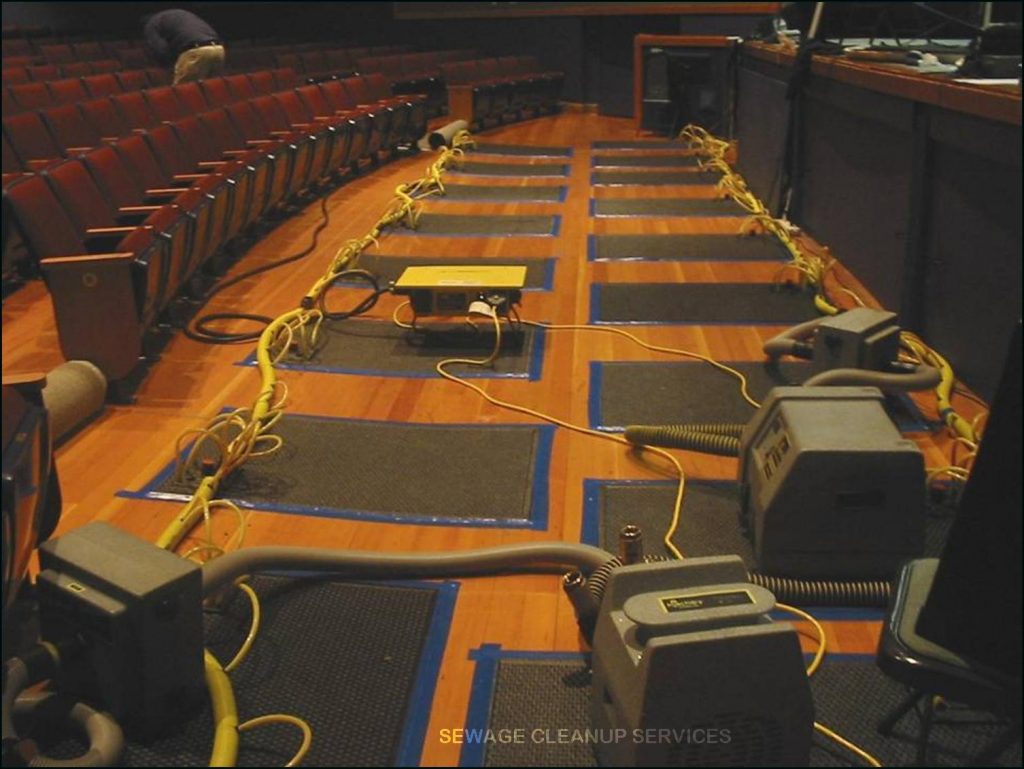
Every sewage loss requires a cleanup plan based on the amount of wastewater, affected materials, contamination, building design, and source of the backup.
1. Safety and Contamination Assessment
The restoration team identifies the affected areas, possible electrical hazards, damaged materials, and the path the wastewater traveled through the property.
2. Stopping the Backup
A plumber, rooter service, sewer contractor, septic professional, or municipal utility may need to clear or repair the line. Cleanup cannot be completed while sewage is still entering the building.
3. Containment
Barriers and controlled work practices may be used to keep contaminated materials, wastewater, and debris from spreading into unaffected rooms.
4. Sewage Extraction
Professional extraction equipment may be used to remove wastewater and standing liquid. Sewage must be handled and disposed of according to applicable local requirements.
5. Removal of Contaminated Materials
Porous materials that absorbed sewage may be difficult or unsafe to restore.
Materials commonly evaluated for removal include:
- Carpet padding
- Drywall
- Insulation
- Ceiling tiles
- Particleboard cabinets
- Laminate flooring
- Mattresses and upholstered furniture
- Contaminated paper and cardboard
6. Physical Cleaning
Remaining surfaces are cleaned to remove waste, soil, and debris. Cleaning must occur before disinfectants can work as intended.
7. Disinfection
An appropriate disinfectant may be applied to cleanable surfaces after visible contamination has been removed. Products should be used according to their labels and should never be mixed.
8. Structural Drying
Dehumidifiers and controlled drying equipment may be used after contamination has been removed. Moisture readings can help determine when walls, floors, framing, and other materials have dried.
9. Odor Control
Removing sewage, damaged materials, and hidden moisture is the most important part of controlling odor. Fragrances alone do not solve the source of the problem.
10. Repairs and Reconstruction
After the property is clean and dry, repairs may include replacing drywall, insulation, flooring, trim, cabinets, and other damaged materials.
What Can Be Saved After Sewage Damage?
The ability to save an item depends on its material, condition, value, and level of contamination.
Materials That May Sometimes Be Cleaned
- Concrete
- Tile
- Some sealed wood
- Metal
- Glass
- Some hard plastic items
Materials That Often Need to Be Discarded
- Carpet padding
- Wet insulation
- Contaminated drywall
- Upholstered furniture
- Mattresses
- Paper products
- Swollen particleboard
- Contaminated food and medicine
- Children’s soft toys exposed to sewage
Photograph damaged items before disposal when it is safe. Follow the insurance provider’s instructions and local rules for disposing of contaminated materials.
Can Sewage Cause Mold Growth?
A sewage backup adds both moisture and organic material to the property. Mold may develop when affected building materials remain wet.
Sewage cleanup and mold remediation are related but separate services. After contamination is removed, the property should be dried and inspected for visible or hidden mold growth.
Learn more about professional mold remediation services.
Understanding Sewer Odors
Sewer odors may come from wastewater, a dry plumbing trap, damaged venting, a broken sewer line, or another plumbing problem.
A strong odor does not confirm the exact gas or level of danger. Leave the area and contact emergency services or the gas utility if the smell could be natural gas, if anyone feels seriously ill, or if there is concern about an unsafe atmosphere.
Do not rely on fragrance sprays or odor treatments before the sewage, contaminated materials, and moisture have been removed.
Does Insurance Cover Sewage Cleanup?
Sewage cleanup is not automatically covered by every property insurance policy. Coverage depends on the policy language, the cause of the backup, applicable endorsements, deductibles, and coverage limits.
Some homeowners and commercial policies require a separate sewer or drain-backup endorsement. Damage caused by outside flooding may require flood insurance. A sewer backup directly caused by a qualifying flood may be treated differently from a backup caused by a clogged private sewer line.
Questions to Ask the Insurance Provider
- Does the policy include sewer or drain-backup coverage?
- What is the coverage limit?
- What deductible applies?
- Does the policy cover cleanup and reconstruction?
- Is personal property covered?
- Does flood insurance apply to this loss?
- What documentation is required?
- Can emergency mitigation begin before an adjuster arrives?
A restoration contractor may help document the loss but cannot guarantee that the insurance company will pay the claim.
Helpful Insurance Documentation
- Photographs and videos of affected areas
- A written list of damaged items
- Emergency service invoices
- Plumbing or sewer reports
- Moisture readings and drying records
- Cleanup and repair estimates
- Receipts for temporary housing or emergency purchases
- Communication with the insurer
How Long Does Sewage Cleanup Take?
There is no fixed timeline for every project. A small backup limited to a hard floor may be cleaned faster than a basement containing contaminated carpet, drywall, insulation, furniture, and stored belongings.
Factors That Affect the Schedule
- Amount of sewage
- Number of rooms affected
- Materials that absorbed wastewater
- Time before cleanup began
- Hidden contamination
- Drying requirements
- Mold growth
- Required plumbing or sewer repairs
- Amount of reconstruction
Drain clearing may sometimes be completed within a few hours, but property cleanup, drying, and reconstruction may take several days or longer. These are different parts of the recovery process.
Plumber Versus Sewage Cleanup Company
A plumber and a restoration company have different roles during a sewer backup.
A Plumber or Sewer Contractor May:
- Clear the blocked drain
- Perform a sewer camera inspection
- Remove tree roots
- Repair a damaged sewer pipe
- Replace a collapsed sewer line
- Inspect plumbing vents and traps
A Restoration Company May:
- Extract sewage from the property
- Remove contaminated materials
- Clean remaining surfaces
- Apply appropriate disinfectants
- Dry affected rooms
- Control odors
- Complete repairs and reconstruction
Some companies provide both services, while others coordinate with separate licensed professionals.
Residential Sewage Cleanup
Residential sewage cleanup may be needed in single-family homes, apartments, condominiums, townhouses, rental properties, and vacation homes.
Common residential losses include:
- Basement sewer backups
- Overflowing toilets
- Blocked main sewer lines
- Septic system failures
- Tree root intrusion
- Storm-related backups
Commercial Sewage Cleanup
Sewage damage can interrupt business operations and create unsafe conditions for employees, tenants, customers, and visitors.
Commercial properties may include:
- Apartment buildings
- Restaurants
- Hotels
- Offices
- Schools
- Retail stores
- Medical facilities
- Warehouses
- Manufacturing buildings
- Government properties
Commercial cleanup may require containment, after-hours work, tenant communication, larger extraction equipment, and coordination with plumbers, facility teams, and insurance representatives.
How to Help Prevent Sewer Backups
Not every backup can be prevented, but regular plumbing care and proper use may reduce the risk.
- Flush only human waste and toilet paper.
- Do not pour grease or cooking oil into drains.
- Use sink strainers to collect food waste.
- Address recurring clogs and slow drains.
- Have older sewer lines inspected when problems continue.
- Remove tree roots when recommended by a professional.
- Maintain septic systems according to local guidance.
- Keep stormwater out of sanitary sewer connections.
- Inspect sump pumps and backup power systems.
- Consider a backwater valve where appropriate.
Backwater Valve Installation
A backwater valve is designed to reduce the chance that sewage will reverse direction through a building’s sewer connection. The valve closes when wastewater begins flowing backward.
A backwater valve is not suitable for every property, and it must be properly installed and maintained. Local codes may control where and how the device can be installed.
A qualified plumber can inspect the sewer system and explain whether a backwater valve may help protect the property.
How Often Should Sewer Lines Be Cleaned?
There is no rule that every property must have its sewer line cleaned once a year. Cleaning frequency depends on the age and condition of the pipes, previous backups, tree roots, grease buildup, building use, and recommendations from a qualified plumbing professional.
Routine inspections or planned cleaning may be useful for:
- Properties with repeated backups
- Older sewer systems
- Restaurants and commercial kitchens
- Buildings with known tree root problems
- Large apartment communities
- Properties with heavy drain use
Unnecessary high-pressure cleaning or aggressive root cutting may damage weak pipes. The sewer line should be evaluated before selecting a maintenance plan.
How to Choose a Sewage Cleanup Company
Questions to Ask Before Hiring
- Does the company have experience with sewage losses?
- Is the company properly insured?
- Are licenses required in this state or city?
- Do technicians have water-restoration training?
- How will contaminated areas be contained?
- Which materials will be removed and why?
- Will moisture readings be documented?
- Are repairs and reconstruction included?
- Will the company provide a written estimate?
- Which services may result in extra charges?
IICRC standards provide professional guidance for water damage restoration. Certification may demonstrate training, but property owners should still verify insurance, licensing, references, and the written scope of work.
Sewage Cleanup FAQs
Is a sewage backup an emergency?
Yes. Sewage may contain harmful contamination and can damage porous building materials. Keep people away from the area and contact plumbing and restoration professionals.
Can carpet be saved after a sewage backup?
Carpet and padding that have absorbed sewage often need to be removed. The decision depends on the material, amount of contamination, and professional evaluation.
Does bleach make a sewage-damaged room safe?
Not by itself. Waste, debris, and contaminated materials must be physically removed before a disinfectant is applied. Surfaces must also be dried.
Can I use a wet vacuum to remove sewage?
A household wet vacuum may expose the user and contaminate the equipment. Large or serious backups should be handled with professional extraction equipment and protective procedures.
Why does my toilet bubble when I use the sink?
Bubbling may indicate trapped air or a blockage in a shared drain or sewer line. Stop using water if several fixtures are affected.
Can tree roots cause a sewer backup?
Yes. Roots can enter damaged pipe joints and trap waste until the line becomes blocked.
Will sewage odors go away after cleanup?
Odors should improve after sewage, contaminated materials, and moisture have been removed. Continued odors may indicate hidden contamination or a plumbing problem.
Does homeowners insurance cover a sewer backup?
Coverage depends on the policy and cause. A separate sewer-backup endorsement or flood policy may be required.
Can sewage damage cause mold?
Yes. Moisture left in drywall, wood, insulation, or flooring may support mold growth. Fast cleanup and drying can reduce the risk.
How quickly can I use the affected room again?
The room should not be used until contaminated materials have been removed, surfaces have been cleaned, and the remaining structure is dry.
Request Professional Sewage Cleanup Services
Do not ignore wastewater coming through a toilet, shower, bathtub, floor drain, or basement plumbing fixture. Stop using water and keep people away from the affected area.
Restoration Companies helps residential and commercial property owners across the United States connect with local professionals for sewage extraction, contaminated material removal, cleaning, structural drying, odor control, mold remediation, and reconstruction.
Response times depend on location, road conditions, local demand, contractor availability, and the size of the loss. No arrival time should be considered guaranteed unless confirmed directly by the assigned provider.
Authoritative Sewage and Water Cleanup Resources
-
Centers for Disease Control and Prevention: Cleaning Safely After a Disaster
-
CDC: Protecting People Who Handle Sewage and Human Waste
-
Environmental Protection Agency: Preventing Sewage Backups Into Basements
-
EPA: Sanitary Sewer Overflow Questions and Answers
-
FEMA: Urban Flooding Guidance for Homeowners and Renters
-
IICRC: Standard for Professional Water Damage Restoration