
Water, Fire and Sewage Damage Cleanup in Durham, NC

A leak, backup or fire can interrupt your Durham home or business and leave the next steps unclear. At Disaster Cleanup Pros, we help you remove the damage, dry affected materials and move toward recovery. Call (888) 990-0530 to tell us what happened and discuss an assessment for your property.
Mention active leaks, sewage or unsafe entry first. Stay away from standing water near wiring and appliances. If a shutoff is safe to reach, stop a plumbing leak at the source; after a fire, wait until the building is cleared for entry.
Check What Needs to Be Cleaned, Dried or Removed

Water from a broken line or appliance can move beneath flooring and into rooms beyond the source. We inspect those connected spaces and areas below an upstairs leak. Moisture readings help identify materials that are still wet after visible water is removed.
We extract standing water and explain what can remain for cleaning and drying. Wet insulation, damaged wall finishes and contaminated materials need their own evaluation. We’ll discuss removal decisions before repair work covers the affected surfaces.
Tell us about wet furniture, business stock or stored belongings. We’ll explain contents handling alongside the building cleanup. Avoid moving contaminated items into unaffected rooms while the loss is checked.
Drying the Structure and Stopping the Source
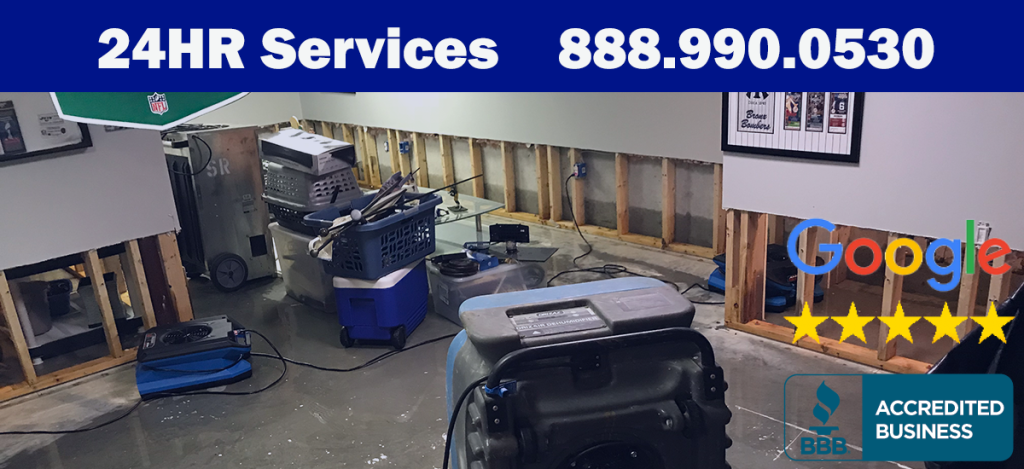
Air movers and dehumidifiers help remove moisture from materials that can stay. Our technicians check readings and explain areas needing more attention. A dry-looking finish does not show the condition beneath a floor or inside a wall.
A plumber, roofer or another specialist may need to repair the source alongside our work. We’ll clarify which tasks are part of cleanup and which need separate arrangements. Repairs should follow the source and drying findings rather than simply hide the damage.
Sewer Backups and Outdoor Floodwater

A toilet or sewer drain backup needs controlled removal and suitable cleaning. Keep people and pets out and avoid tracking contaminated water into clean rooms. Do not run household fans over sewage.
We remove affected water, clean salvageable surfaces and identify absorbent materials that need disposal. Carpet padding and insulation may not be suitable for drying in place. Tell us if the source remains active so it can be addressed alongside cleanup.
Water entering from outdoors also needs a contamination check. If a storm damaged a roof or window, temporary protection may be needed while permanent repairs are arranged. We’ll discuss the entry point and affected interior together.
Fire Recovery Goes Beyond the Burned Room
Once safe entry is cleared, we check soot, smoke odors and affected contents along with water left by firefighters. Tell us about odors or dampness in adjoining spaces. The visible fire damage may show only part of what needs attention.
Avoid scrubbing soot before the surface and residue are checked. We’ll explain cleaning methods and which belongings need evaluation. Odor treatment follows source cleanup rather than covering the smell.
A Recovery Plan for Your Durham Property

For a home in Walltown, a business in Bragtown or another Durham property, give us the exact address and affected rooms. Tell us about tenants, shared spaces and essential areas you need to use. We’ll explain equipment placement and which rooms need to remain closed.
We help record damage photos, moisture readings and work details for insurance documentation. Talk with us about direct billing and records for your adjuster. Coverage remains the insurer’s decision under your policy.
For nearby locations, see Chapel Hill, Morrisville and Cary. Call us to confirm availability at your address.
Call (888) 990-0530 to discuss cleanup and recovery in Durham. We’ll begin with the immediate damage and the next available assessment.
Questions About Cleanup and Recovery
What should I tell you about affected belongings?
Describe what is wet and where it is located. Avoid spreading contamination into clean rooms; we’ll discuss handling and evaluation of the contents.
Why check moisture after water removal?
Materials beneath surfaces can remain wet. Readings help us follow drying progress and explain what needs attention before repairs.
Does repairing the leak finish the restoration?
The wet building materials still need cleanup and drying. We’ll clarify the scope and any source repair that needs another specialist.
Can firefighting water affect adjoining rooms?
Yes. Once entry is cleared, we check its path through the building along with soot, smoke and affected contents.
What will you explain before work begins?
We’ll discuss the cleanup scope, drying checks and materials needing attention. Ask us about separate repairs, access restrictions and records for your adjuster.