
Newark, NJ Disaster Restoration and Water Cleanup

A fire, flood or sewage overflow can damage different parts of a building at once. We help Newark owners sort out the cleanup, remove water and work toward recovery without overlooking wet materials or smoke residue. Call (888) 990-0530 to discuss the loss and the next available inspection.
Look at the Whole Loss After a Fire
After the building is cleared for entry, we examine more than the burned surfaces. Soot can affect adjoining rooms and water used to extinguish a fire can soak floors and wall materials. We check those conditions together before setting the cleanup sequence.

Leave residue-covered walls and furnishings unwiped until they are evaluated. Cleaning depends on both the residue and the finish; an unsuitable method can smear soot or harm a surface. We explain which contents may be cleaned and which require separate evaluation.
Smoke odor can come from affected materials, not simply the room air. We identify cleaning and removal needs rather than mask the odor. Electrical and structural damage needs appropriate specialist attention before rooms return to normal use.
Extract Water and Check What Remains Wet
Whether the water came from firefighting, a failed pipe or an appliance, extraction is the start of the moisture work. We remove standing water and inspect surrounding materials. A clear floor does not tell us whether the layers beneath it or a nearby wall cavity are dry.
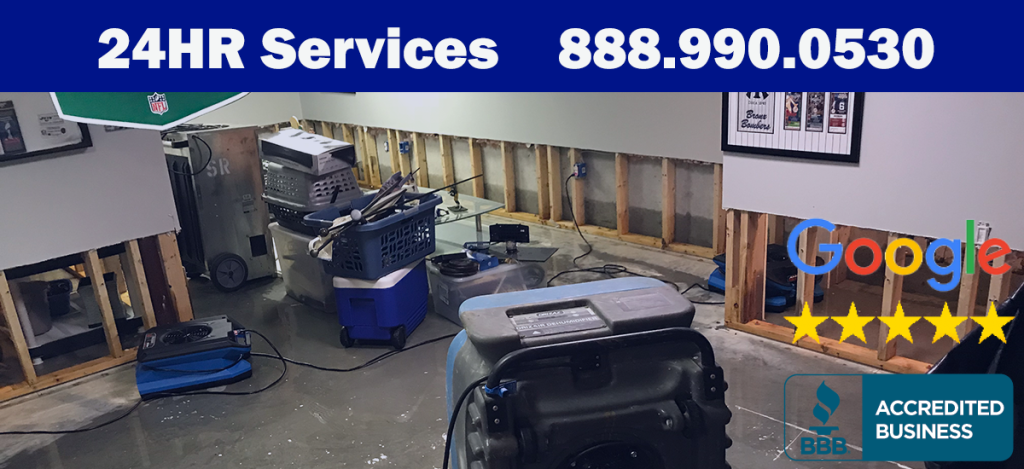
We use moisture readings to guide removal and drying decisions. Damaged padding, wet insulation or materials that cannot be appropriately cleaned may need to come out. If a floor or wall needs opening, we explain how that access supports recovery and what repairs remain afterward.
Air movers and dehumidifiers help dry retained materials. Checks during the work show whether the setup needs adjustment. We review drying findings before affected areas are covered with new finishes, rather than use surface appearance as the only stopping point.
Sewage and Outside Water Change the Cleanup

A drain backup requires controlled handling of contamination. Keep children and pets away, avoid tracking wastewater into clean rooms and do not direct household fans across the spill. Tell us which fixtures overflowed and whether the drain or sewer source has been repaired.
We remove the contaminated water, separate unsuitable absorbent material and clean suitable surfaces. Retained structural materials also require drying. Contents need evaluation by material and condition, so ask before carrying wet items elsewhere or discarding important belongings.
Storm or flash-flood water entering from outside also requires contamination checks. If windows or the roof are damaged, we discuss temporary protection and coordination with permanent repairs. Drying cannot resolve an opening that continues to admit water.
Understand the Scope and the Next Repair Step

Tell us who occupies the building and what access matters during cleanup. Equipment, removed finishes and contaminated work areas can limit use. We discuss those restrictions and the sequence of work before an affected room is treated as ready for occupants.
Photos, moisture findings and work details help document the loss. Ask about direct insurance billing and records for your adjuster; your insurer decides coverage. Nearby information includes Harrison, Kearny and Belleville. Call (888) 990-0530 to discuss recovery at your Newark property.
Questions About Cleanup and Recovery
Can fire damage include rooms that did not burn?
Yes. We check soot, odor and firefighting water beyond the burned area where the loss suggests they traveled. Those rooms may need cleaning or drying.
Should I try washing a smoke-covered wall?
Wait until the surface and residue are evaluated. The wrong cleaning method can smear residue into the finish or make recovery more difficult.
Does outside floodwater need different handling from a pipe leak?
Its source and contamination matter. We evaluate the affected materials before deciding what can be retained, cleaned or dried.
Can new flooring go in once water is extracted?
The underlying materials still need checking. We review moisture and remaining damage before the area is covered again.
What should I say when arranging the inspection?
Give us the address, source of damage if known, active hazards and what work has already occurred. Tell us about occupants and essential access as well.