
Water Damage and Disaster Restoration in Gardner, MA

When water, sewage or smoke damages your Gardner home or business, we help you understand the cleanup and the work needed to recover. At Disaster Cleanup Pros, our team assesses affected spaces, removes water and explains what needs cleaning or drying. Call (888) 990-0530 with your address and a description of the damage.
Tell us about active water, sewage or unsafe access first. Keep away from standing water near electrical equipment and close off contaminated areas. Stop a plumbing leak only if you can safely reach the shutoff, and wait for clearance before entering a fire-damaged building.
Leaks and Water in Lower-Level Spaces

A broken supply line, appliance overflow or drain backup can wet more than the room where you first notice it. We check the source and the path water took before planning extraction. Moisture readings help identify affected materials in adjoining rooms or spaces beneath the original leak.
For a basement loss, tell us whether water appeared at a drain, sump pump or wall. A plumber or another specialist may need to address the source alongside cleanup. We’ll explain which work we handle and what needs separate repair before finishes are replaced.
Drying and Material Assessment
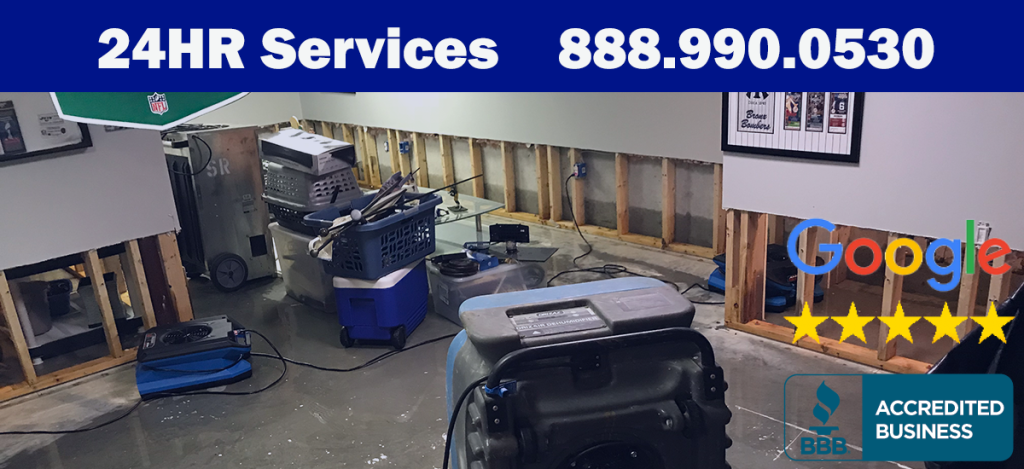
Air movers circulate air across affected surfaces, and dehumidifiers remove moisture from the air. We choose equipment to suit the rooms and wet materials and check progress with further readings. Flooring, insulation and enclosed finishes need evaluation before they are covered or repaired.
Some materials can be cleaned and dried; others need removal. Water source, contamination and the condition of the material affect that decision. We’ll explain the findings and which areas need more attention rather than deciding a room is ready from its surface appearance.
Cleanup After Sewage

A toilet or sewer drain backup calls for controlled removal and cleaning. Keep people and pets out of the affected area and avoid tracking water through clean rooms. Household fans should not be used over sewage.
We assess contamination, remove affected water and evaluate porous materials and contents. Carpet padding or insulation that absorbed sewage may need disposal rather than drying in place. We’ll explain what can be cleaned and the restrictions needed while the space is being restored.
Fire, Smoke and Storm Recovery
After a fire, soot, smoke odors and water used by firefighters can affect different rooms. Once safe entry is confirmed, we assess those areas together. We’ll discuss contents handling and what needs cleaning, drying or removal before repairs are arranged.
For storm damage, tell us about roof openings, broken windows or water that entered from outside. Temporary protection may be needed while repairs are planned. Outdoor water needs a contamination assessment before we decide how to clean affected materials and remove debris.
A Plan for Your Gardner Property
For a business downtown, a home in West Gardner or another property in the city, tell us which spaces are out of use and who occupies the building. Shared tenant areas, a wet kitchen or affected business equipment change what you need from the space. We’ll discuss access, equipment placement and restricted rooms.
If a pipe burst during freezing weather, mention it when you call. The damaged line needs repair as well as the wet space needing drying. We’ll help clarify those separate tasks so cleanup and source repairs fit together.
Know the Next Step Before Repairs Begin

We’ll walk you through our findings, the proposed cleanup and the drying checks before work starts. Ask us which repairs need separate coordination. Photos, moisture readings and work details help document the loss and the work performed for your adjuster.
Talk with us about direct insurance billing and the records needed for your claim; your insurer decides coverage. Call (888) 990-0530 with your Gardner location and the rooms affected so we can discuss the next available assessment and what you can do safely while waiting.
Questions About Cleanup and Recovery
What should I tell you about a wet basement?
Describe where the water appeared and whether a drain, sump pump or plumbing fixture was involved. Mention an active source or unsafe access first.
Can drying begin before the source is repaired?
The source needs attention alongside the wet space. We’ll explain the cleanup scope and when a plumber or another specialist needs to coordinate separate repairs.
How do you decide whether wet materials can be kept?
We assess the water source, contamination and material condition. We’ll explain what can be cleaned or dried and what needs removal.
Can smoke damage affect rooms beyond the fire?
Yes. We assess those spaces and contents once entry is cleared. Firefighting water can also create drying work away from the original fire.
What records can help my adjuster understand the loss?
Photos, moisture readings and work details help document the damage and cleanup. Ask us about records and billing arrangements while your insurer determines coverage.