
Fire and Water Damage Recovery in Big Creek, GA

A fire can leave several kinds of damage that need different work. We help property owners in Big Creek with smoke residue, water removal, drying and recovery after sewage or storms. Call (888) 990-0530 to describe the loss and discuss the next available assessment.
Do not enter a fire-damaged building until the responsible officials clear access. Keep away from wet electrical equipment and unstable ceilings. Tell us about sewage, continuing water and any area that cannot be reached safely.
Define Smoke Cleanup Before Touching Surfaces

After safe entry is confirmed, we check soot, odors and the materials carrying residue. A room does not have to burn for its surfaces or belongings to need attention. We discuss cleaning methods suited to the material rather than assume one approach fits the entire property.
Leave soot undisturbed until the surface is checked instead of wiping it with a household product. Tell us which belongings you need urgently. Cleaning possibilities and separate handling should be discussed before items are moved or discarded, with documentation first when safety allows.
Locate Water Left by Firefighting
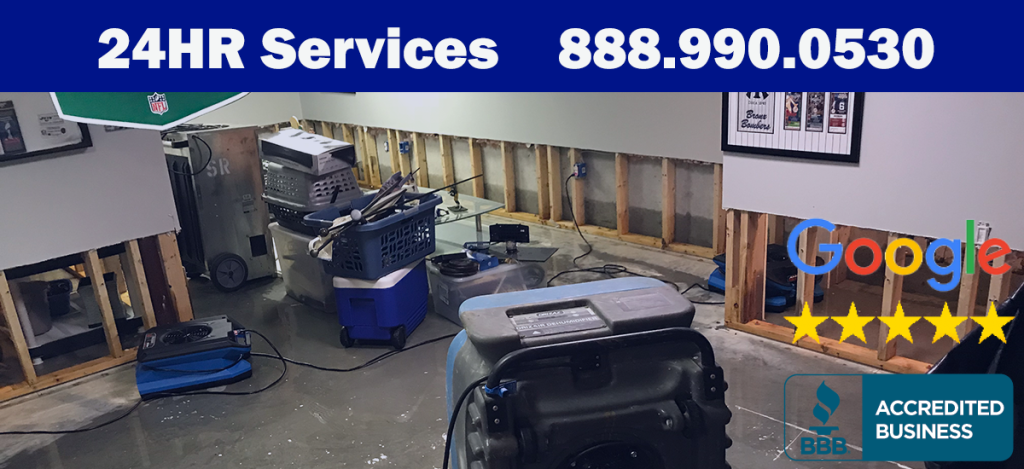
Water used to extinguish the fire may soak flooring, walls and spaces below. We extract standing water and use moisture readings to identify affected materials. Drying needs remain part of the scope while smoke cleanup is considered.
The same checks help after a supply-line or appliance leak. Water can stay below a finish or become visible in an adjoining room later. Tell us about those changes, including dampness on another level, so the affected extent can be checked.
Make Retention and Removal Decisions Clear

Contamination, material deterioration and whether moisture can be reached effectively affect what can stay. Some surfaces can be cleaned and dried. Others need removal before reconstruction. We explain the findings before repairs hide the affected area.
Where drying is appropriate, air movers and dehumidifiers support the work. Further readings show progress and guide equipment changes. A dry-looking finish is not enough to establish the condition beneath it. Source repairs by a plumber, roofer or another specialist are separate from extraction.
Keep a Backup From Contaminating More Space
Keep people and pets away from a toilet or sewer overflow. Avoid fixtures that add to the backup and do not run household fans over sewage. Tell us which drains were involved and whether the flow continues.
We remove contaminated water, clean suitable surfaces and identify porous materials needing disposal. Sewage-soaked padding or insulation may be unsuitable to retain. Avoid carrying wet belongings through unaffected rooms. Plumbing repair to prevent recurrence is separate from recovering the contaminated space.
Storm Exposure and Use During Recovery
Tell us how outside water entered and whether an opening remains exposed. Temporary protection may be necessary until permanent repairs are arranged. Contaminants and debris in outside water affect the handling of materials and contents.
We discuss equipment locations, rooms needing closure and paths required for essential access. Let us know which spaces support daily life or business. Restrictions should be clear before contents movement or damaged-material removal changes the layout.
For nearby locations, see Alpharetta and Suwanee. Call us to confirm current availability for your address.
Record the Work and the Next Steps

We explain proposed cleanup and document affected areas, moisture findings and completed work. These details can support communication with your insurance adjuster. Ask about direct billing and coordination with repairs; your insurer determines policy coverage and payment.
For recovery help in Big Creek, call (888) 990-0530. Tell us the cause, affected rooms and any immediate concerns about entry.
Questions About Cleanup and Recovery
Does an unburned room need checking after a fire?
It can. Soot, odors or firefighting water may affect adjoining areas. We check those conditions rather than limit the scope to visible burn damage.
Should I wipe soot with a household product?
Leave residue undisturbed until the surface is checked. An unsuitable method can smear soot or damage the material and complicate cleaning.
Why check moisture while discussing smoke cleanup?
Firefighting water creates its own material damage. Readings help identify drying needs so wet areas are not overlooked while residue is cleaned.
Can sewage-soaked insulation stay if it dries?
Drying alone does not address contamination. Absorbent materials may need disposal while appropriate surfaces receive cleaning and remaining-moisture checks.
Does direct billing guarantee the claim pays?
No. We can discuss arrangements and supply damage and work records. Your insurer decides coverage and payment under the policy.